
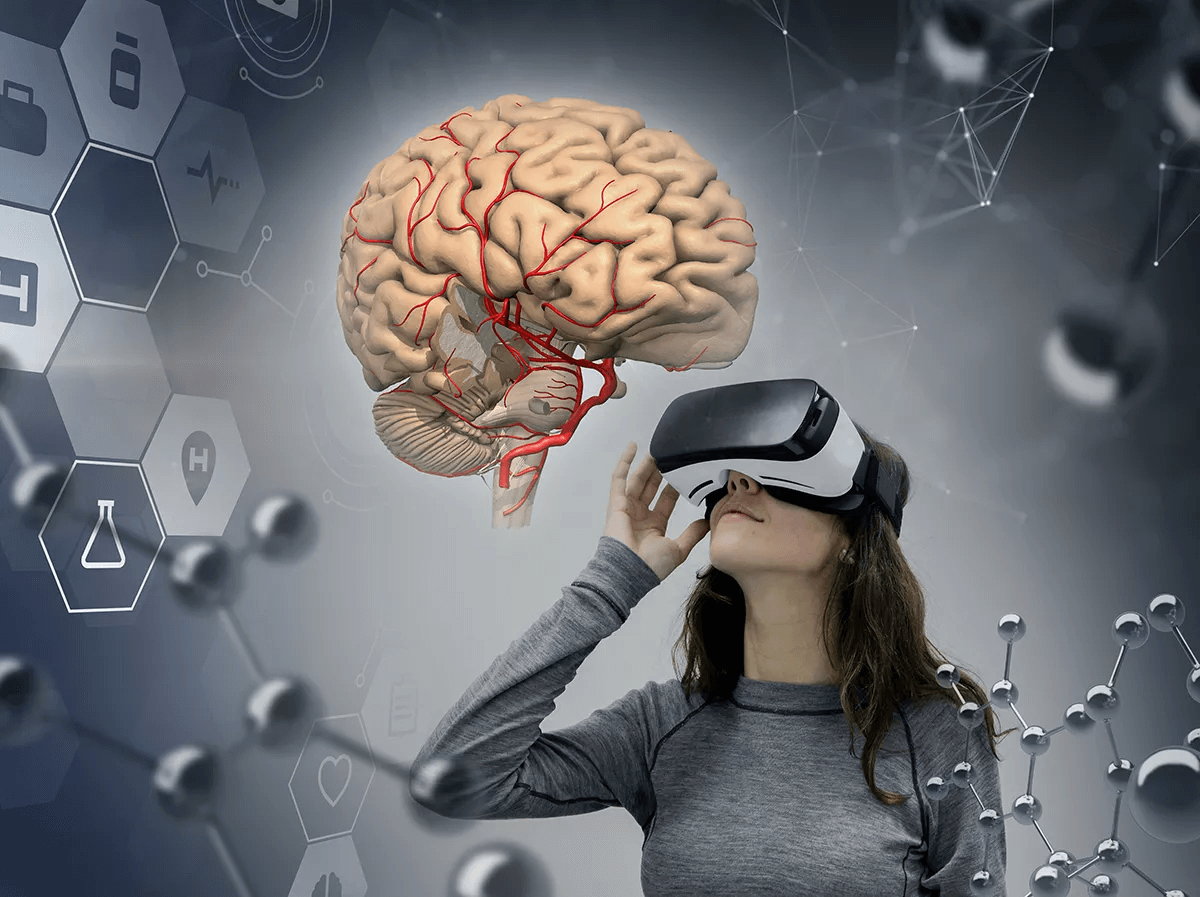
Anatomy education has always been a cornerstone of medical and health sciences training. But traditional methods — textbooks, 2D diagrams, and even dissection labs — often fall short in conveying the complexity of three-dimensional anatomical relationships. Enter Virtual Reality (VR) and Augmented Reality (AR): game-changing technologies that are redefining how students learn, engage, and succeed.
Why VR and AR Matter in Anatomy Learning
Imagine stepping inside the human heart, traveling down the pharynx, or placing a virtual hand on your desk to examine and interact with anatomical structures. With VR and AR, these experiences aren’t science fiction — they’re part of today’s anatomy classroom.
Primal Pictures’ meticulously crafted 3D anatomical models, built from real scan data, are the most medically accurate on the market. With VR and AR integration, these models become immersive, interactive, and unforgettable.
The Benefits of VR in Anatomy Education
- Boost Comprehension and Retention: VR enhances spatial understanding by allowing learners to rotate, dissect, and manipulate anatomical structures — a skill difficult to master with 2D resources.
- Increase Engagement and Motivation: Immersive environments create a sense of presence — the feeling of “being there” — which makes learning more memorable and enjoyable.
- Cost-Effective and Scalable: When access to donated bodies or physical labs is limited, VR offers an affordable, scalable solution without compromising educational quality.
What the Research Says
Recent studies confirm what educators and students are experiencing firsthand:
- A 2024 systematic review in Anatomical Sciences Education found VR/AR outperformed traditional methods, with nearly all students showing higher knowledge gains compared to lectures.
- A 2025 review in The Cureus Journal of Medical Science reported that 71% of studies showed statistically significant improvements in anatomy learning outcomes with VR, including better spatial understanding and knowledge retention.
- A June 2025 study in BMC Medical Education revealed that 82% of students believed VR could reduce exam anxiety, and 93% supported integrating VR into their curriculum.
Experience Anatomy Like Never Before
With Primal VR you can:
- Immerse yourself inside the body and click on anatomical structures for instructional text.
- Manipulate the model in 360° by zooming in, rotating, and panning.
- Add, remove, or ghost structures with dissection tools.
With 3D Real-time AR, you can:
- Use your mobile device as a “window” through which you can view and interact with the model as it is projected into the three-dimensional space of the real world.
- View models in multiple orientations without a headset, and compare them side-by-side with real-world resources.
- Collaborate and interact in ways that make learning dynamic and memorable.
Customizing Anatomy Learning Through VR
To see Primal VR in action, please see this case study highlighting a recent collaboration focused on teaching ocular anatomy and orbital trauma. The resulting app allow users to highlight, isolate, and animate anatomical structures while referencing real dissection images.
Primal VR is transforming anatomical education, making it more engaging, intuitive, and accessible. This case study highlights the growing potential of XR-based tools for medical training and clinical skill development.
Ready to Take Anatomy Education to the Next Level?
Stay at the forefront of educational innovation. Learn more in this flyer, case study, white paper, and video, or contact us today for a demo or free trial.