
What do almonds, coconuts, hemp, and quinoa all have in common? Besides being the building blocks of a potentially delicious breakfast bowl, they are all plants that produce milk. Aug. 22 is World Plant Milk Day, created to raise awareness of sustainable and healthy alternatives to animal milk, including milk from soy, nuts, seeds, and grains. Thanks to an increase worldwide in the number of vegans and vegetarians, coupled with a perception among younger people that animal milk may contain high levels of antibiotics or contribute to the inhumane treatment of animals, plant-based milks have surged in popularity since the 2010s.
Along with concerns about ethics and health, the incidence of diagnosed lactose intolerance has skyrocketed as well, with an estimated two-thirds of the world’s adults suffering from the inability to digest the sugars (lactose) found in animal milk. In fact, 46% of adults who drink non-dairy milk at least once a week cited its easier digestibility as their primary reason for choosing to go dairy free.
The content in this post is from Primal’s Anatomy & Physiology module on Anatomy.tv. To learn more about this or other Primal learning resources, please fill in the form here and our team will be in touch.
What is lactose?
Lactose is a sugar made up of two simpler sugars (glucose and galactose) found naturally only in human and non-human mammal milk. In the body, these sugars are deconstructed by lactase, an enzyme most humans are born with to help them break down the lactose in human breastmilk. As we age, our body’s natural production of lactase declines, sometimes resulting in the inability to digest these sugars. In areas of the world that have been domesticating animals and drinking their milk for tens of thousands of years, lactase production continues into adulthood. But in areas where drinking animal milk has historically not been the norm, lactase production stops at a much earlier age. The result of drinking milk for those whose bodies do not produce lactase? Unpleasant bloating, diarrhea, gas, and cramping.
What is the lactose chemical digestion process?
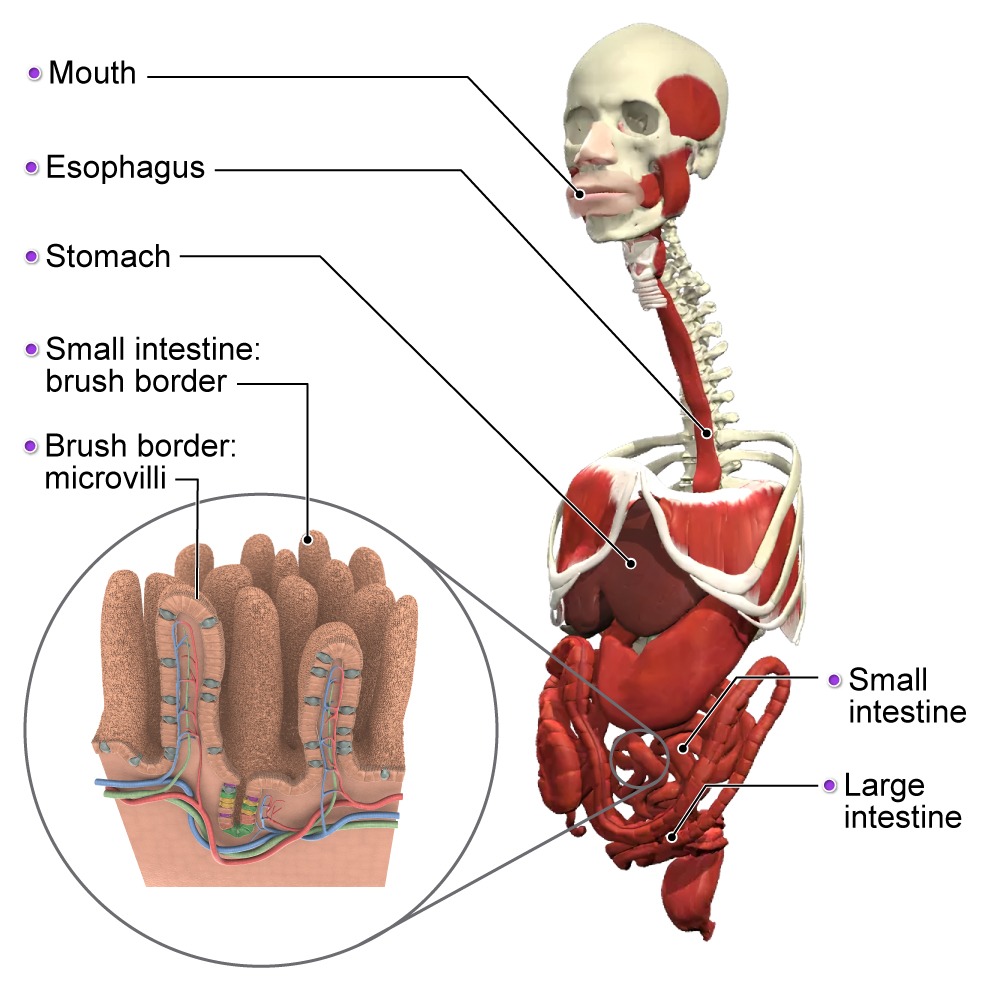
The digestion of lactose begins when milk or a product containing milk enters the body via the mouth, where salivary amylase begins to chemically break it down before it travels to the small intestine, where most nutrient absorption takes place.
The bulk of lactose digestion happens in what is known as the brush boarder of the small intestine. The brush boarder consists of microvilli, microscopic cell extensions from the apical plasma membranes of the mucosa cells present on the inner lining of the small intestine. When observed under a microscope, these microvilli look like tiny points packed together, resembling the tips of a brush, hence the term “brush boarder.” They serve to expand the surface area of the intestinal mucosa to allow for easier absorption of nutrients. They also produce digestive enzymes, including lactase, which are used to break down complex carbohydrates (sugars) and proteins. Lactose is a disaccharide (two sugar molecules linked together) that is usually broken down into glucose and galactose by lactase to make these sugars easier for the body to absorb and use for energy.
Following their stint in the small intestine, any remaining unabsorbed carbohydrates are then sent to the large intestine, where fermentation occurs, breaking them down further. In the case of someone who is lactose intolerant, an absence or deficiency of lactase means that an increased fermentation process must occur in the large intestine. The result of this additional fermentation would be excess gas, bloating, abdominal discomfort, and flatulence.
How to distinguish between intolerance and allergies?
While lactose intolerance is a common condition worldwide, impacting an estimated 65% of the global population, it can sometimes be confused with a milk allergy, although the two differ significantly in their causes. Distinguishing between an allergy and an intolerance is vital for the proper management of symptoms, which can be similar in both cases. However, food allergies involve a reaction of the immune system and can lead to potentially life-threatening responses like anaphylaxis. Food intolerances involve difficulties in digestion and symptoms that, although uncomfortable, are not dangerous or immune-system related.
In the case of a milk allergy, the immune system reacts to milk’s casein and whey proteins. There are two types of this reaction: IgE-mediated and non-IgE-mediated. IgE-mediated reactions involve the production of IgE antibodies, which can cause immediate hives, wheezing, swelling of the tongue or throat, shortness of breath, and/or anaphylaxis. Non-IgE symptoms take longer to come on, appearing hours or days after milk is ingested, and can include diarrhea, abdominal cramps, or blood in the stool. These symptoms are similar to the ones that are present in people who are lactose intolerant, who may experience diarrhea and stomach discomfort, bloating, flatulence, nausea, and vomiting after ingesting milk. These similarities often result in difficulties diagnosing a true milk allergy versus an enzyme deficiency, which is present in lactose intolerance.
How to live without lactose?
What should you do if you find yourself feeling distinctly unwell after drinking a milkshake or eating a grilled cheese sandwich? First, take it slow. Sometimes people with lactose intolerance may mistakenly believe they have a milk allergy. They respond to this misapprehension by completely eliminating all products containing milk from their diet — even if doing so is not necessary, since they may in fact be able to digest certain amounts of lactose. This type of overly restrictive or unbalanced diet can cause subsequent nutritional deficiencies and associated health problems if not carefully planned. Instead of cutting out all milk products, those with lactose intolerance symptoms may experiment with ingesting smaller amounts or seeking out lactose-free products. These can be foods where the manufacturer has added lactase to milk during production, or lactase supplements that you sprinkle on or ingest before enjoying a café latte or bowl of ice cream.
If you do suspect you have a milk allergy, a diagnostic elimination diet (removing milk and specific products made with milk and then gradually reintroducing them under medical supervision to identify which are causing the allergic reaction) is the gold standard for identifying both IgE-mediated and non-IgE mediated milk allergies. Once it is determined that an allergy — and not just an intolerance — exists and which foods should be avoided, you and your healthcare provider can come up with a plan for a balanced diet that still includes the vital nutrients and minerals found in milk.
The content in this post is from Primal’s Anatomy & Physiology module on Anatomy.tv. To learn more about this or other Primal learning resources, please fill in the form here and our team will be in touch.