
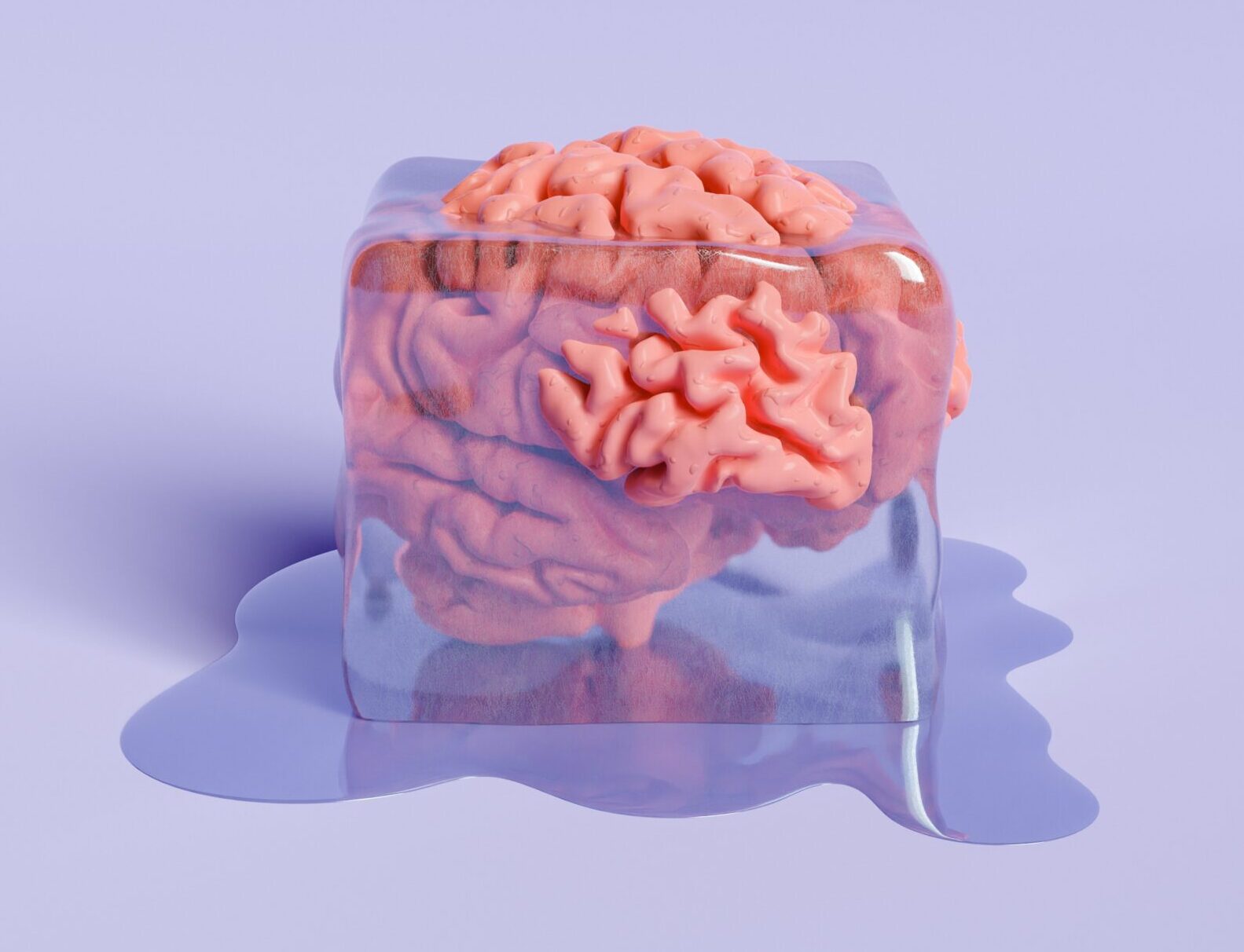
Ever had a headache from eating ice cream too fast? That sudden, stabbing pain in your forehead commonly known as brain freeze? Scientifically referred to as sphenopalatine ganglioneuralgia, brain freeze is a brief but intense headache triggered by the rapid cooling and rewarming of the mouth’s roof (the palate).
The content in this post is from Primal’s Dentistry and Dental Hygiene modules on Anatomy.tv. To learn more about these or other Primal learning resources, please fill in the form here and our team will be in touch.
What Is the Relevant Anatomy During Brain Freeze?
To understand brain freeze, it’s essential to examine the anatomy of the palate. The palate is supplied by the greater palatine artery, a branch of the maxillary artery. The region is innervated by the greater palatine nerve, which is a sub-branch of the maxillary nerve. The maxillary nerve is one of the major branches of the trigeminal nerve, also known as the fifth cranial nerve (CN V).

The arteries and veins that supply the palate are lined by three layers:
- Tunica intima: The thin innermost layer that is lined with epithelial cells to regulate permeability and vascular tone to ensure adequate blood flow.
- Tunica media: The middle layer made of smooth muscle cells and elastic fibers. This is the main layer that is responsible for vasoconstriction (narrowing) and vasodilation (widening) of blood vessels.
- Tunica externa (adventitia): This thick outer layer, mainly composed of connective tissue consisting of elastic and collagen fibers, provides structural support. It contains a network of tiny nerves, lymphatics, and capillaries that supply the vessel wall.

What Physiological Changes Happen to Your Body During Brain Freeze?
The physiological response during brain freeze involves a rapid sequence of vascular and neural events, which are all parts of a natural survival reflex. Initially, cold exposure causes vasoconstriction in the greater palatine arteries. As the temperature normalizes, vasodilation occurs, leading to increased blood flow and pressure on the vessels.
This sudden change in the diameter of the blood vessels activates pain-sensitive neurons, called nociceptors, in the vessel walls. The maxillary nerve then transmits these pain signals sent from the greater palatine nerve to the brain via the trigeminal nerve. However, the maxillary nerve isn’t the only branch that stems from the trigeminal nerve. The mandibular and ophthalmic nerves also arise from the trigeminal nerve, and they innervate the rest of the face and forehead. This means that sometimes, a signal sent from the greater palatine nerve may get shared with the rest of the trigeminal nerve branches, as they all share the trigeminal nerve as their root.
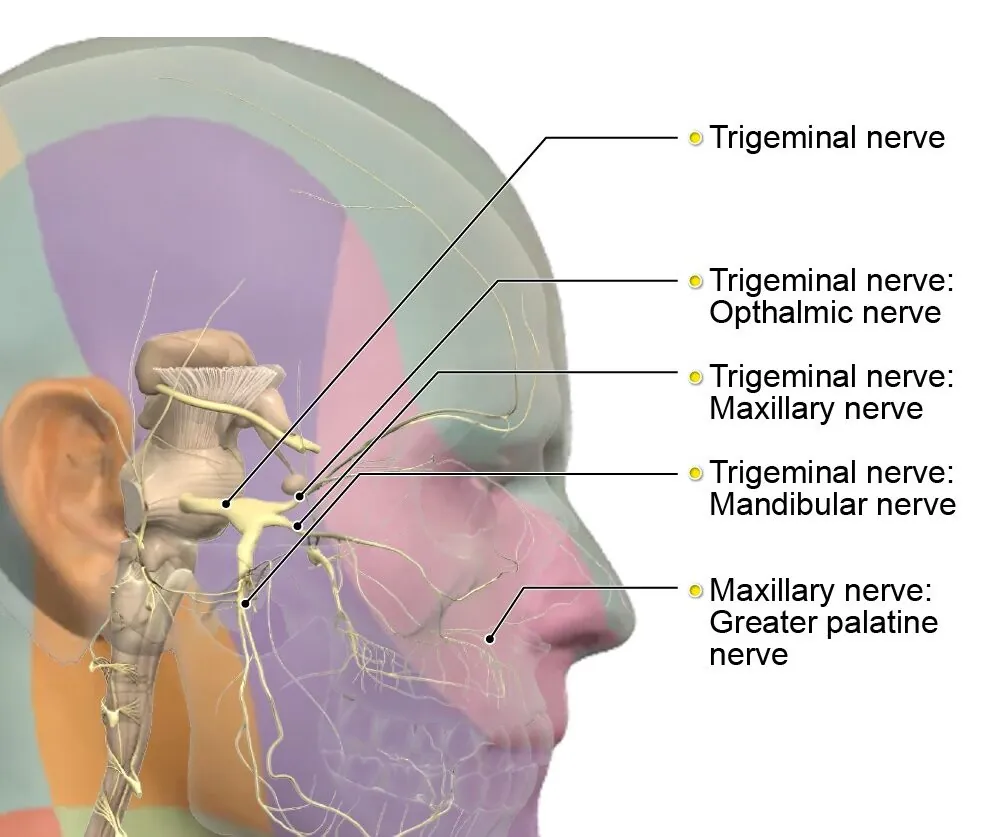
As a result, the brain can misinterpret that the pain is originating from the forehead instead of the palate, similar to what occurs in certain types of headaches and migraines.
5 Fun Facts About Brain Freeze
- Brain freeze typically lasts less than 30 seconds, making it one of the shortest headaches
- Not everyone experiences brain freeze. Individual sensitivity to cold and nerve response varies.
- Children are more prone to brain freeze due to their more reactive nervous systems
- Pressing your tongue against the roof of your mouth can help warm the area and alleviate the pain.
- Brain freeze is used as a model for studying migraines because of its rapid onset and vascular involvement.
Brain freeze is a fascinating example of how our body’s vascular and neural systems interact in response to environmental stimuli. Understanding the anatomy and physiology behind this phenomenon not only satisfies curiosity but also provides insights into broader neurological and vascular mechanisms. Next time you enjoy a cold treat, remember not to rush and consider the complex interplay of blood vessels and nerves that can temporarily ruin your fun!
The content in this post is from Primal’s Dentistry and Dental Hygiene modules on Anatomy.tv. To learn more about these or other Primal learning resources, please fill in the form here and our team will be in touch.