
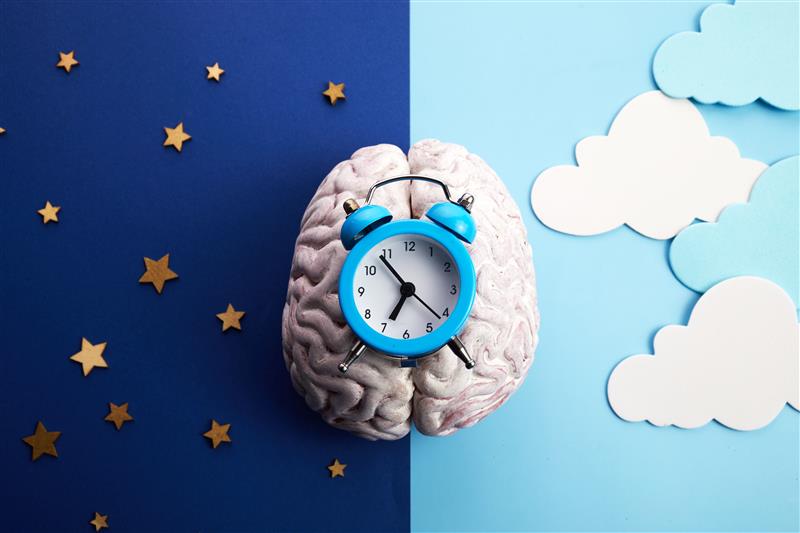
What is social jet lag?
It’s Monday morning and despite sleeping late all weekend, you can barely muster the strength to turn off your alarm. Why are you so tired? The answer may be that you’re suffering from a misalignment of your natural circadian rhythm, or body clock, a phenomenon sometimes referred to as “social jet lag.”
Social jet lag stems from the common practice of disrupting your usual sleep cycle timing — often dictated by the demands of work or school — by staying up later and sleeping later into the morning. On weekends especially, seeing friends, going to parties, and other social activities often take you out of your normal sleep pattern, causing your body’s internal clock to be out of sync with your environment. More than being a mere shift in schedule, this inconsistency in sleep patterns is linked to myriad health concerns, including reduced cognitive abilities, poor sleep quality, metabolic issues, obesity, diabetes, emotional and behavioral problems, and more. While similar to problems often associated with jet lag from travel, social jet lag differs in its cause (changing schedules, rather than changing time zones) and duration (a chronic, rather than temporary condition).
The content in this post is from Primal’s 3D Atlas and Head & Neck Basic Neuroanatomy modules on Anatomy.tv. To learn more about this or other Primal learning resources, please fill in the form here and our team will be in touch.
What is the anatomy and physiology of sleep?
To understand the vital impact that quality sleep has on your overall health and wellbeing, it is important to understand how it works. Your sleep-wake behavior is dictated by your body’s circadian rhythm, a built-in internal clock that runs on a 24-hour cycle. It controls a wide variety of processes and functions, from regulating body temperature to aligning your immune responses to influencing digestion and mood. Your circadian rhythm is controlled by regions and structures located deep within your brain. These include:
- The hypothalamus, which controls the transition from wakefulness to sleep based on the amount of light exposure.
- The basal forebrain, which also promotes the wake/sleep cycle.
- The brainstem, including the pons, midbrain, and medulla, which controls the wake/sleep transition by communicating with the hypothalamus. It also relaxes our muscles during REM sleep to minimize the body’s motion while dreaming.
- The amygdala, a small portion of the brain responsible for processing emotions, which becomes highly active during REM sleep and makes our dreams feel more realistic.
- The thalamus, which processes and relays sensory information that is blocked out during non-REM (rapid eye movement) sleep stages. (It becomes active again during REM sleep and fill our dreams with various senses.)
- The pineal gland, which is responsible for increasing the production of melatonin to promote sleep when you go to bed.

When your typical sleep pattern is disrupted — say by staying up to attend a late showing of a movie, by sleeping for hours after your alarm normally goes off, or by changing the clock for daylight savings time — the result is social jet lag.
What are some causes of social jet lag?
Despite its name, social jet lag is caused by a variety of activities that don’t have to include your circle of friends. Shift or overnight work schedules can contribute to the dysregulation of sleep cycles and increase the possibility of developing associated health issues. Shift work also changes mealtimes, leading to disruption in the way the body processes blood sugar (glucose). And using illuminated electronic screens at night, like endlessly scrolling on your phone or tablet before bed, can cause a failure of the brain to produce the melatonin needed for achieving a restful night’s sleep.
What are the health impacts of social jet lag?
Throwing off the natural circadian rhythm of the body can result in significant physical, mental, and emotional consequences. These can include:
- Developing metabolic disorders, like type 2 diabetes, obesity, and metabolic syndrome (MetS)
- Greater likelihood of developing mood disorders, like depression
- Increased risk of cardiovascular disease
- A higher chance of cognitive impairment and greater risk for developing Alzheimer’s disease
Each of these can have negative and long-lasting impacts on overall health, in some cases leading to the development of other chronic illnesses.
How can you manage social jet lag?
Do the risks of social jet lag mean you are doomed to sticking to an “early to bed, early to rise” lifestyle, never enjoying a late evening out or the luxury of hitting the snooze button a few times in the morning? No. Luckily, there are some practical steps you can take to lower your risk of developing harmful side effects from social jet lag. Establishing and maintaining a consistent bedtime routine and practicing good sleep hygiene are two of them. By doing things like avoiding caffeine, alcohol, and nicotine late in the day, engaging in relaxing activities before bed, and ensuring that you’re sleeping in a quiet, dark, and cool environment, you’ll increase the odds of getting quality sleep on the nights your routine is not disturbed. Practicing good habits like having meals at regular times, exercising regularly, avoiding daytime naps, and limiting your exposure to electronic screens at night can also help promote better, healthier sleep. These practices may also be used as part of chronotherapy, a behavioral treatment aimed at realigning your circadian rhythm with your environment. Chronotherapy also often includes exposure to light from an artificial light box that emits light similar to sunlight, used to readjust how and when your body produces melatonin.
Speaking of melatonin, some people with circadian rhythm disorders may also benefit from using either melatonin receptor agonists or melatonin dietary supplements to regulate their sleep-wake cycles. As always, before starting a new supplement, consult with your doctor first to ensure it won’t interfere with any medications you’re taking or any other health conditions you may have.
Disclaimer: This content is intended for informational purposes only and does not constitute medical advice. Always consult a qualified healthcare professional before making any changes to your health, wellness, or medical routine.
The content in this post is from Primal’s 3D Atlas and Head & Neck Basic Neuroanatomy modules on Anatomy.tv. To learn more about this or other Primal learning resources, please fill in the form here and our team will be in touch.